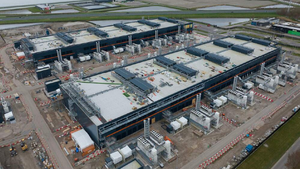
Nvidia’s reported $2.9 billion investment involvement in Australian data centre operator Firmus Technologies marks a significant signal in the evolution of AI infrastructure, not just in Australia, but globally.
While the transaction itself is notable for its scale, its broader importance lies in what it represents: the accelerating convergence between AI compute demand and infrastructure development, and the increasing role of AI-native hardware ecosystems in shaping where and how data centres are built.
This is no longer a story about isolated infrastructure expansion. It is a signal of structural alignment between chipmakers, infrastructure operators, and sovereign compute markets.
Why This Deal Matters Beyond Capital
At face value, the Firmus Technologies deal represents a significant injection of capital into Australian AI infrastructure capability. However, the more important signal is strategic rather than financial.
Nvidia’s involvement indicates a deepening integration between AI hardware ecosystems and physical infrastructure deployment. As demand for GPU-intensive workloads accelerates, infrastructure is no longer a passive layer in the stack, it is becoming co-designed alongside compute architecture.
This shift has three key implications:
First, data centre design is increasingly being shaped around AI workload requirements rather than generic enterprise compute.
Second, capital is being deployed earlier in the lifecycle to secure capacity aligned with anticipated GPU demand.
Third, infrastructure providers are becoming strategic enablers of AI ecosystems rather than standalone real estate or utility businesses.
Firmus Technologies sits directly within this transition.
Australia as an Emerging AI Infrastructure Market
Australia is emerging as a strategically important region for AI infrastructure deployment, driven by a combination of sovereign data requirements, regional cloud expansion, and increasing enterprise AI adoption.
Historically, the market has been constrained by scale and perceived geographic isolation. However, these constraints are being offset by structural demand changes.
Three factors are particularly important:
- Sovereign and regulatory requirements are increasing demand for domestic compute capacity, particularly in regulated sectors such as government, healthcare, and financial services.
- Hyperscaler expansion in the Asia-Pacific region is pushing secondary infrastructure markets like Australia into greater strategic relevance.
- AI workload localisation is increasing the need for high-density compute infrastructure closer to end users and data sources.
The result is a market where demand is accelerating faster than traditional infrastructure cycles can accommodate.
Firmus Technologies and AI-Native Infrastructure
Firmus Technologies has positioned itself as an AI-native infrastructure operator, focusing on high-density compute environments optimised for modern GPU workloads.
This is a critical distinction. Traditional data centre operators have historically been built around enterprise IT requirements: predictable workloads, moderate density, and long-term colocation contracts.
AI infrastructure changes this model entirely.
It requires:
- significantly higher power density per rack
- advanced cooling systems, often liquid-based
- rapid scalability to accommodate model training cycles
- closer integration between hardware and facility design
Firmus is operating in this new category of infrastructure provider, one that is not simply hosting compute, but enabling AI training and inference at scale.
The Real Constraint: Power and Speed to Market
Across all major data centre markets, including Australia, the dominant constraint is no longer land availability or even capital allocation.
It is power, both in terms of grid access and the time required to bring new capacity online.
AI workloads dramatically increase per-rack power consumption, which places additional strain on already constrained grid infrastructure. In many cases, the limiting factor for new data centre development is not demand, but the ability to secure and deliver sufficient power at the required density.
This is where deals like Firmus become strategically important. They signal a move toward pre-aligned infrastructure investment, where capital, demand, and power planning are being coordinated earlier in the lifecycle.
What This Signals for the Broader Market
The Nvidia–Firmus transaction should be interpreted as part of a broader structural shift in how AI infrastructure is being developed.
Three trends are becoming increasingly clear:
1. Vertical integration of AI infrastructure ecosystems
Chip manufacturers, model developers, and infrastructure providers are becoming more tightly coupled.
2. Pre-funded capacity alignment
Capital is being deployed earlier to secure infrastructure that aligns with projected AI demand, rather than reacting to it.
3. Regional acceleration of AI-ready markets
Markets like Australia are moving from secondary colocation hubs to strategic AI infrastructure nodes.
This is not a temporary cycle-driven expansion. It is a structural repositioning of the global data centre landscape around AI compute requirements.
Implications for Operators and Enterprise Buyers
For operators, this signals a shift in how capacity is financed, designed, and brought to market. Traditional build-and-lease cycles are being compressed by demand certainty linked to AI ecosystems.
For enterprise buyers, particularly those deploying AI workloads, this reduces optionality in the market. Capacity is becoming more structured, more pre-allocated, and more closely tied to long-term ecosystem partnerships.
In both cases, timing becomes critical. Access to infrastructure is no longer just a procurement exercise — it is a strategic alignment problem between demand, power, and deployment capability.
Conclusion
Nvidia’s involvement in Firmus Technologies represents more than a capital investment. It reflects a broader transformation in how AI infrastructure is being conceived, funded, and deployed globally.
Australia, once considered a secondary data centre market, is increasingly becoming part of the core AI infrastructure network, driven by sovereign demand, power constraints, and hyperscaler expansion.
As AI adoption accelerates, the gap between compute demand and physical infrastructure will continue to narrow, but only for those markets and operators able to align capital, power, and execution early in the lifecycle.
In that sense, this deal is not an endpoint. It is a marker of where the market is heading next.