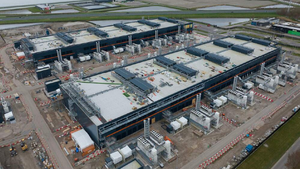
The UK Government announced five AI Growth Zones in January 2026 as part of the AI Opportunities Action Plan: Culham in Oxfordshire, Teesside in the North East, Blyth in Northumberland, Newport in South Wales, and Chapelhall in North Lanarkshire. The announcement was positioned as a mechanism to accelerate data centre development by streamlining planning, improving grid access, and attracting capital to designated locations.
Eight months on, the evidence base is sufficient to assess what the designation has actually delivered — and what it has not. The headline from Senedd Research’s August 2026 briefing is instructive: zone designation does not equal planning consent, planning consent does not equal a grid connection, and a grid connection offer does not equal an energisation date. Each of those steps involves a separate process, a separate timeline, and a separate set of risks. The AIGZ designation affects some of them more than others.
This article assesses each of the five zones on the evidence available, and draws out what the designation has and has not changed for developers and investors evaluating these locations.
What AI Growth Zone designation actually provides
The designation package published in January 2026 included four elements: a commitment to streamlined planning consideration for data centre applications within the zone boundaries; a commitment to accelerated grid connection processes for designated projects; access to a dedicated government liaison function; and eligibility for National Wealth Fund guarantee support for qualifying financing structures.
The planning streamlining operates through two routes. Projects below the NSIP threshold continue to be determined by local planning authorities, but with a material planning weight attached to the AIGZ designation. Projects above the threshold can apply for a Development Consent Order direct to the Secretary of State, bypassing the local authority entirely. The revised NPPF published on 17 August 2026 strengthens the policy framework for both routes.
The grid connection acceleration is the more contested element. Ofgem’s TMO4+ reforms introduced a first-ready-first-connected principle that applies across the queue regardless of AIGZ status. Being in an AIGZ does not automatically move a project to the front of the connection queue — it provides access to a dedicated engagement process with National Grid and the relevant DNO, and in some cases has enabled faster progression through the gated milestones. The practical benefit depends heavily on which zone and which substation is relevant.
Zone by zone: what the evidence shows
Lanarkshire — the benchmark
Lanarkshire is the strongest evidence point for what an AIGZ designation can deliver when the underlying ingredients are in place. Designated in January 2026, the zone has produced: a £300m NWF-backed financing package for DataVita DV1 and DV3 in August, with full capacity contracted to CoreWeave on a 15-year lease; a planning application for DV4 (£849.6m, 120MW) submitted in September; and Dell establishing its Scottish base at the AI Innovation Park.
The Lanarkshire result is not solely a function of the AIGZ designation. DataVita had been operating at Chapelhall for over a decade, DV1 was already Scotland’s largest purpose-built Tier III facility, and CoreWeave was already a customer. The designation provided the NWF financing gateway and the planning policy support that converted an existing operational platform into a fundable expansion programme. Seven months from designation to £300m of signed debt is fast by any measure of UK infrastructure development.
South Wales — strong foundation, planning scrutiny intensifying
The South Wales AIGZ encompasses Newport and Cardiff, where Vantage’s 148MW campus with its 400kV SuperGrid connection and Nebius’s deployment at Newport’s CWL1 facility are already operational or in progress. Microsoft has a development at Imperial Park. The zone has the potential to exceed 1GW by the early 2030s, according to the government’s own projections — which would represent 13% of Wales’s total electricity generating capacity in 2024.
The challenge in South Wales is not demand or capital. It is the planning framework’s ability to assess the cumulative impact of nine sites simultaneously, when applications are determined one at a time by local authorities without a mechanism for sector-wide impact assessment. Senedd Research’s August 2026 briefing identifies this directly. The AIGZ designation improves the policy weight for individual applications; it does not solve the cumulative assessment problem.
Oxfordshire (Culham) — grid the primary constraint
Culham’s designation reflects its existing credentials: the UK Atomic Energy Authority campus, proximity to the Oxford-Cambridge Arc, and an established industrial electricity supply. CBRE notes that Oxfordshire is one of the locations actively receiving new development beyond the established Slough corridor, as developers seek power availability outside areas where the transmission system is most congested.
The grid position at Culham is more nuanced than the designation implies. The site has an existing high-voltage supply from its nuclear research heritage, but the capacity available for data centre use and the timeline for expanding that capacity to meet the scale of development the government is projecting are still being worked through. The designation has accelerated engagement with National Grid on the connection route, but has not yet produced the confirmed capacity position that the zone’s scale ambitions require.
North East England (Teesside and Blyth/Northumberland) — industrial scale, emerging credentials
The North East zones benefit from two advantages: available industrial land at scale, and grid infrastructure that reflects the region’s industrial heritage. QTS/Blackstone’s Cambois campus in Northumberland — green-lit at £10 billion by Northumberland County Council in December 2025 for the first two of ten data centre buildings — and a second £3.8 billion proposal nearby from Wansbeck Regeneration demonstrate the scale of capital looking at this market.
The North East zones are earlier in their development cycle than Lanarkshire and South Wales. The planning frameworks are being established, the grid engagement is ongoing, and the anchor tenant pipeline is building rather than contracted. For developers with a 2028-2030 operational horizon, these zones represent genuine opportunity. For those needing capacity on a shorter timeline, they require more patience than the more mature AIGZ locations.
What the designation has not changed
Three things remain unchanged by AIGZ designation, regardless of zone.
Grid connection timelines. The Ofgem commitment fee consultation — closing 16 September — is the primary mechanism for clearing the queue, not the AIGZ designation. Projects in designated zones have access to dedicated engagement, but they still need to progress through the gated milestone process. A project in an AIGZ with a conditional grid enquiry is not in a materially better position than a project outside an AIGZ with a confirmed connection offer.
The requirement for EIA discipline. The Buckinghamshire Foxglove case has established that environmental mitigation commitments must be binding and enforceable for large applications. AIGZ designation does not create an exemption. Applications within zones that do not meet the EIA standard are as vulnerable to legal challenge as any other application.
The need for committed demand. The DataVita Lanarkshire result was produced by a combination of AIGZ designation, NWF financing, and a 15-year CoreWeave lease. The lease came first — it was the committed demand that made the financing possible and the planning case credible. Developers in any AIGZ who assume that designation will attract demand post-construction are making the same sequencing error that has stalled projects outside designated zones.
Armason: AIGZ advisory and capacity sourcing across UK and European markets
Armason tracks development activity, grid intelligence, and offtaker demand across all five UK AI Growth Zones and the wider UK and European data centre market. We work with operators, developers, and capital providers on the sequencing — grid, demand, planning, capital — that determines whether a development programme delivers.
If you are evaluating an AIGZ development opportunity or sourcing capacity within a designated zone, contact the Armason team.
Contact: jordan@armason.co.uk | armason.co.uk
Related reading
· Data centre site selection in the UK: the new sequence in a power-first market
· AI Growth Zones UK: what they actually mean for data centre developers and grid access
· Scotland data centre development: why the market is expanding beyond London
· Why most UK data centre pipelines fail before they complete
Sources referenced in this article
· Data centres in Wales: how will Wales manage a rapidly growing industry? — Senedd Research
· DataVita secures £300m for data centre rollout in Scotland’s AI Growth Zone — National Wealth Fund
· Data centres now Nationally Significant Infrastructure Projects — Norton Rose Fulbright
· Ofgem acts to free up grid capacity by tackling speculative data centre projects — Ofgem
· UK Data Centres Outlook 2026 — CBRE
· 10 UK data centre construction projects to watch — Construction Wave
· Forsters: data centres formally brought into the NSIP regime — Forsters LLP