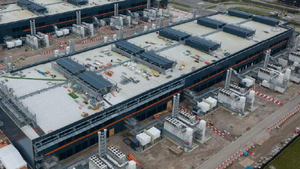
Land becomes data centre land because of power, not acreage. Bowmont’s analysis of the powered land market puts it plainly: “The value is rarely in the land. It is in the power.” The price gap shows why. Reuters reported Savills figures of about £4.5m to £6m per acre for London industrial land against about £8m to £15m per acre for land suitable for a data centre, with Colliers saying powered land sells for up to 2.5 times other industrial land. Bowmont, citing Savills’ H1 2026 Data Centre Spotlight, notes power-ready industrial land reaching as high as £15m an acre in prime cases, but argues that headline prices usually lose their conditions by the time they reach a landowner.
That gap is why landowners are being approached, and why the approach matters. A site with a firm connection is worth multiples of one without. A site without one is, at best, an option on power. Reuters described grid connection requests tied to land with no power, no planning permission and no potential end user as “zombie projects”, and landowners can be left holding the consequences. This article covers what makes land viable, how to test a developer’s claims, how the main deal routes compare, and how to think about value.
What makes land data centre land
Power
Power is the first test and usually the deciding one. BCLP calls securing a high-capacity, reliable connection “the single most critical factor in site selection and project delivery” and notes that connection queues can run to ten years or more in West London. Farrer notes that sites may need more than 90MVA of supply and that, at the time of its article, National Grid had effectively paused new connection orders, so a landowner may need a party that already holds a connection agreement, whose value depends on its place in the queue and its contracted capacity.
A connection that already exists changes everything. Reuters reported that the Wilton site’s case rests on an existing 240MW grid connection plus on-site generation, not on a plan for one. Harworth, which sold the Skelton Grange site in Leeds to Microsoft in 2024 for $106.6m, has entered an exclusivity agreement for a powered land sale at another site that has an accepted power connection offer.
Connection reform is also changing what landowners are asked for. Savills notes that under reformed connection rules, land control evidence, including multi-year option agreements, is required for Gate 2 status. A landowner may therefore be asked for an option by a party that needs it to hold or secure a queue position, not because it intends to build. That can be a legitimate request, but the landowner should understand what the option is for.
Fibre, hazards and the physical site
Farrer lists the physical tests: proximity to existing lit fibre with room to grow, freedom from nearby chemical works and flood zones that raise operational risk and insurance premiums, wide access roads for heavy vehicles, and space for construction and expansion on a largely flat, usable site. Fisher German’s Henry Mawhood reduces the criteria to three, access to power, access to fibre and land availability near customers, and argues that data centres do not need to be close to large cities. BCLP adds that restrictive covenants, easements and historic land rights can obstruct cooling systems and fibre routes, which is a title check a landowner can make before a developer does.
Planning
Planning is the third test. Large data centres in England can opt into the Nationally Significant Infrastructure Projects regime, under which applications are determined by the Secretary of State rather than the local planning authority. Farrer notes that data centres are generally treated as B8 storage or distribution, though a sui generis classification is possible and local authorities differ, which can add planning cost. BCLP notes that mandatory Biodiversity Net Gain applies and that large schemes often need Environmental Impact Assessments covering carbon, water use and noise.
Local opposition is now part of the value equation. The Skelton Grange site that Harworth sold to Microsoft has since received planning permission, but more than 44,000 people have signed a petition against the scheme. In Scotland, the Parliament backed a pause on planning decisions for new hyperscale AI data centres for up to 12 months while national guidance is developed. And CPRE is calling for a brownfield-first policy with strong enforcement and transparency on water and energy use. Policy pressure favours previously developed land with existing infrastructure, which helps some landowners and disadvantages others.
Test the opportunity before you talk price
Before price comes up, a landowner can test what a developer is actually offering. A short list of questions separates a real opportunity from a speculative one.
Does a grid connection offer exist for this site, who holds it, and on what capacity and energisation date? A date that is not firm is not a connection: Reuters reports that about a third of the power offered to one London project was pushed back by more than a decade. Where does the site sit in the NESO queue? Is there a named end user? Equinix’s UK managing director argued that buying a site with outline planning and a confirmed grid connection “removes the risk”, which tells you what a serious buyer is looking for. What is the planning route, and who pays for it?
And is the developer funded? Ofgem’s proposed commitment fee of £237,500 to £712,500 per MW is designed to separate serious projects from speculative ones. If the fee is adopted, a developer that has accepted a connection offer will have money at risk, which is a useful signal of seriousness.
The routes: sale, option, promotion, lease and joint venture
Outright sale
An outright sale gives certainty and a clean exit. It is the route being used where a site already has power and planning prospects: Harworth has entered an exclusivity agreement with an unnamed data centre provider for a powered land sale at a site with an accepted power connection offer. The landowner’s risk is in the conditions. A conditional contract with long conditions can leave the landowner bound while the buyer tests the connection, so conditions, long-stop dates and deposit terms matter as much as the headline figure, which is exactly the point Bowmont makes about headline prices losing their conditions.
Option
An option gives the developer the right to buy at an agreed price within a set period in return for a premium. For a developer it is the cheapest way to hold a site while testing the connection and the planning route. Bowmont warns that operators or brokers often option sites cheaply, test for a connection and withdraw when none is found, leaving landowners with a lapsed agreement.
The most useful published guidance on option terms comes from housing rather than data centres, but the principles transfer. Farmers Guide says option and promotion agreements usually run for three to 15 years, advises that “short is best”, and recommends that the developer pays planning costs and the landowner’s agent and legal fees. Given the Gate 2 land control requirement, an option may also be what a queue applicant needs to evidence control, so exclusivity, extension premiums and exit terms should reflect what the option is actually being used for.
Promotion
Under a promotion agreement the land is sold on the open market and the promoter takes a percentage of the proceeds, which exposes the land to competitive bids in a way an option does not. Whether promotion suits a powered land opportunity depends on who is best placed to secure the connection and the end user, and the agreement should define that role precisely.
Lease
A lease lets the owner keep the land and receive a long-term income. Fisher German’s Henry Mawhood says leasing lets owners keep their land while gaining a reliable, long-term income stream. The detail matters. Farrer notes that data centre leases differ from standard commercial leases, that landlords can bear major operating costs such as power, cooling and security infrastructure, and that they should expect significant upfront capital expenditure and ongoing maintenance obligations. A ground lease of bare land to a developer who builds and operates is a different proposition from letting a built facility, and a landowner should be clear which one is on offer.
Joint venture
A joint venture offers a share of the upside in return for exposure to execution. BCLP describes developer and institutional joint ventures in which the developer usually brings the site in through initial site control, such as an option agreement, while the investor supplies most of the equity. That article does not address landowner participation, so a landowner contributing land should assume the terms are negotiated rather than standard, and should expect any investor to focus on the power position and committed demand.
Valuing the opportunity
Price per acre is a poor guide to value because it ignores what the land can deliver. A more useful measure is deliverable power and how far the site has progressed. The range reported by Reuters, £8m to £15m per acre for data centre land against £4.5m to £6m for London industrial land, describes sites at different stages, not a single price.
Value tends to step up as each risk falls away. A site with no connection is land with an option on power. A site with a connection offer is power with a planning risk. A site with an accepted offer, a planning route and a named user is infrastructure. Savills notes that pricing stays aggressive where power, site control and a planning route are secure, which tells a landowner where the premium sits. A landowner who sells before the power position is firm is typically selling the risk discount. One who waits carries the risk. Neither is wrong, but the choice should be made knowingly.
Common traps
Three recur. The first is the cheap option used to test a connection, covered above. The second is exclusivity without a long-stop date: a landowner who grants exclusivity while a developer assesses the site takes on the whole timing risk, particularly when connection waits are reported at 12 to 15 years. The third is a headline price that carries conditions the landowner has not seen. Alongside these, title deserves a check of its own, since restrictive covenants and easements can block cooling and fibre routes and are better found early.
The sequence for a landowner mirrors the one for a developer. Understand the power position first, then the planning route, then the commercial route, and only then the price.
Armason: neutral introductions for landowners and sites
Armason connects sites with data centre potential to the operators, developers and capital providers who are actively sourcing, without a bias towards any one buyer. If you hold land with a grid connection, an accepted offer or a substation nearby and want to understand how the market will read it, contact the Armason team.
Related reading
· Data centre site selection in the UK: the new sequence in a power-first market
· Why most UK data centre pipelines fail before they complete
· Data centre grid connection in the UK: timelines, queues and what operators need to know
Sources referenced in this article
· Powered land: how the data-centre and AI land rush is repricing the countryside (Bowmont)
· Powered land and zombie projects: real estate in the age of AI (Reuters, via Stockopedia)
· With great power comes great responsibility: what landowners should know about data centres (Farrer)
· Landowners approached by developers: option or promotion agreement? (Farmers Guide)
· Mastering powered land transactions for UK data centres (BCLP)
· Research briefing CBP-10315, published 27 May 2026 (House of Commons Library)
· UK data centres 2026 spotlight: building capacity (Savills)
· The rise of strategic joint ventures and alternative structures in data centre investment (BCLP)
· Ofgem acts to free up grid capacity by tackling speculative data centre projects (Ofgem)
· Mayor defends £4bn Microsoft data centre plans (Yorkshire Evening Post)
· Scotland delays new AI datacentre approvals for up to a year (Computing)