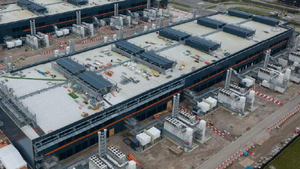
Debt gets most of the attention in data centre funding, but equity decides whether a project starts. JLL reports that up to 80% of data centre development funding relies on debt, which leaves equity to fund the balance. It is also the capital that sits first in the loss order. BCLP describes equity as the highest-risk, highest-return tranche of the capital stack.
This article explains who provides data centre equity in the UK, how the main structures work, the terms that decide who controls and who is paid, what equity investors test before committing, and what the UK numbers show.
Who provides data centre equity
The pool is a mix of capital with different appetites. BCLP says private equity funds seek opportunistic returns, while pension funds and sovereign wealth funds seek stable, inflation-linked income. BCLP’s joint venture note adds that institutional investors, meaning pension funds, sovereign wealth funds and specialist infrastructure funds, supply most of the equity, while developers contribute site control, technical know-how, supply chain and tenant relationships, and hyperscale tenants can hold equity in property companies linked to long-term leases.
The balance has shifted towards funds. Savills reports that since 2021, 80% to 90% of closed data centre deal value in EMEA came from private equity, real estate funds or infrastructure investors, up from just over 50% in 2020. That figure covers EMEA rather than the UK alone, and the Savills article dates from November 2025, but it shows the direction.
The fund pool is deep. Goldman Sachs, citing Preqin data, reports record infrastructure fundraising of $221 billion in 2025, returns of 12.8% for the year, about $400 billion of dry powder as of September 2025, and 695 funds fundraising to target $555 billion as of May 2026. It also notes that digital infrastructure funds are increasingly classified as infrastructure rather than real estate. Capital is looking for assets. The question is which assets meet its tests.
Where equity sits and how much a project needs
The amount of equity depends on how much of the income is contracted. Osborne Clarke says project finance through a special purpose vehicle suits new builds where revenues can be secured through long-term leases to anchor tenants, with limited recourse to sponsors beyond equity at an agreed debt to equity ratio. One broker guide puts senior development debt at 60% to 70% of cost, with sponsor equity often 35% to 45% for speculative schemes. That guide is a broker’s marketing document, so the figures are indicative only.
BCLP is specific about what pushes the requirement up. Speculative or partly pre-let developments face tighter equity requirements, colocation or speculative facilities with multiple tenants on short leases need a larger equity cushion, and lenders require higher equity contributions if hyperscale tenants resist non-disturbance agreements. Mezzanine debt can bridge the gap between the senior loan and the required equity contribution. Contracted income lowers the equity a sponsor needs. Uncontracted income raises it.
Three ways equity is structured
Large projects rarely rely on one developer’s balance sheet. BCLP says single-developer financing is unsustainable for large projects, which can need more than half a billion pounds per hyperscale facility, plus access to powered land and grid connections. It describes three main structures.
Developer and institutional capital joint venture
A special purpose vehicle, which may be a company or limited partnership, is formed for a specific site, with the developer contributing site control, often through an option agreement, and development expertise, and the investor providing most of the equity. Risk is split by stage, with the developer carrying more of the planning, permitting and construction risk and the investor carrying long-term market risk.
Programmatic joint venture
A long-term platform covers a pipeline of projects, governed by investment criteria such as target locations, minimum power capacity and pre-leasing requirements, and an approval framework for each new development. For a developer this is repeatable capital. For an investor it is a way to access a pipeline it could not source alone.
Property company with hyperscale tenant equity
The terms that decide who controls and who is paid
The shareholder agreement matters as much as the headline numbers. BCLP calls the joint venture or shareholder agreement a critical legal process that defines the partners’ relationship, covering waterfall provisions, governance rights, entrenched rights, deadlock resolution and exit.
On the waterfall, cash flow typically returns invested capital first, then pays a preferred return of 8% to 10% IRR, and the residual profit is then split with a developer promote of 20%, while more complex waterfalls use multiple hurdles and catch-ups. On governance, investor consent is required at board level for reserved matters such as the annual budget, major contracts, new finance and asset sales, while developers usually retain day-to-day control. Deadlock options include mediation, expert determination, or buy and sell mechanisms such as “Texas shoot-out” or “Russian roulette” clauses.
Exit terms are where long-dated capital protects itself. BCLP lists rights of first refusal and first offer, drag-along and tag-along rights, and forced sale dates, such as 7 to 10 years after inception, with the majority financial investor often able to sell after a lock-in period and the developer compensated. BCLP flags ambiguity in complex waterfall calculations and conflicts of interest in tenant-equity structures as risks to manage in the drafting.
What equity investors test first
Equity is first in line for loss, so it tests the same things lenders test, earlier and harder.
Power
BCLP says lenders will not fund projects with uncertain connection dates, and equity that goes in before the debt does carries that risk first. Osborne Clarke notes that uncertainty over planning or regulatory compliance will delay credit approvals and increase financing costs. Queue reform adds a further check, because Ofgem is acting to free grid capacity by tackling speculative data centre projects, and a queue position that cannot be defended is not an asset.
Demand
Kroll says debt is mainly available for de-risked, fully leased assets, which leaves development-stage projects dependent on equity and on sponsors who can show demand. The market has moved to pre-letting, with Savills recording that 96% of the c.66MW due to complete between the second and fourth quarters of 2026 is already pre-sold. An equity investor will ask what evidence of demand a project has, and at what level.
Delivery and sponsor
BCLP says fixed-price, date-certain construction contracts are essential, backed by performance bonds and parent company guarantees. The sponsor’s role in a joint venture is to deliver, so site control, the connection offer and the planning route are what investors diligence in a developer.
Sustainability and consent
BCLP notes that strong ESG performance can lower risk, reduce the cost of capital and widen the investor pool, and that lenders and institutional equity partners run their own ESG due diligence, including alignment with the EU Taxonomy and the UK’s net-zero trajectory. Public consent now sits next to this. The Guardian reports that an industry taskforce including Nvidia, Microsoft and Cisco has told government Britain has roughly 12 months to build a compact that earns public consent for data centres. A project that cannot show its community position is harder to underwrite.
What the UK numbers show
Tracxn data reported by Servnet shows $5.7bn of equity funding across 154 UK data centre infrastructure companies, with only 24 having raised any equity, Nscale accounting for about 65% and London-based companies attracting 93%. The same report lists GreenScale at $1.3bn, Kao Data at $177m and Verne at $125m, and logs 36 acquisitions and two IPOs in the sector.
Two cautions apply. A company funding tracker will not necessarily capture project-level joint venture equity, so it understates the capital sitting in site-specific vehicles. And the concentration it shows is a reminder that equity is selective, with a few platforms taking most of what is raised at company level.
What a developer should bring to an equity conversation
A credible pack for an equity partner is a short list, each item evidenced. Site control, with the option or title behind it. The connection offer, with the date, capacity and cost. The planning route and the consent position. Demand at its true evidence level, whether letter of intent, heads of terms or signed lease. The construction price and programme. And the structure proposed, including the waterfall, reserved matters and exit terms the developer is prepared to offer.
Where equity conversations stall is predictable. The connection date is not firm, so the programme cannot be fixed. Demand is at letter of intent stage, so the investor sizes the project as speculative. The waterfall is ambiguous. Or the tenant’s dual role as shareholder and lessee has not been addressed. Each of these is a problem that can be fixed before the first meeting.
Armason: neutral introductions between sites, demand and capital
Armason does not raise capital for projects. It introduces developers with powered sites and committed demand to the capital partners who fund builds and partnerships, with no bias towards either side of a transaction. If you hold a project that clears these tests, get in touch.
This article is general market information. It is not financial, legal or investment advice. Armason is an introducer: it is not authorised by the FCA and does not raise capital or advise on investments.
Related reading
· Data centre investment in the UK: why capital is abundant and execution is not
· Data centre offtake UK: how demand gets matched to capacity in a constrained market
· Data centre development costs UK: what projects actually cost to deliver in 2026
· Why most UK data centre pipelines fail before they complete
Sources referenced in this article
· BCLP: The rise of strategic joint ventures and alternative structures in data centre investment
· Osborne Clarke: EU and UK financing trends are reshaping data centre projects
· JLL: More lenders look to deploy capital as developers seek competitive finance
· Goldman Sachs: Private markets are expected to have a growing role in data center financing
· Savills: EMEA data centre investment and deal volumes
· Servnet: UK data centre investment 2026, Nscale takes nearly two-thirds (citing Tracxn)
· Kroll: UK data centers, hyperscale growth meets infrastructure fragility
· Savills: Spotlight on UK data centres 2026
· FD Commercial: Data centre development finance in the UK
· Ofgem: Ofgem acts to free grid capacity, tackling speculative data centre projects
· The Guardian via AOL: AI firms say UK has a year to head off datacentre protests