UK Data Centre Intelligence — Week Commencing 6 July 2026
This week in UK data centres:
A gas-powered data centre proposed for Microsoft’s former UK headquarters in Reading
The government’s planning reforms take effect — data centres can now fast-track approval at national level
The grid queue story deepens as the Savills H1 report frames execution as the market’s defining variable
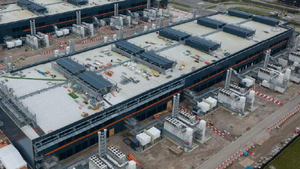
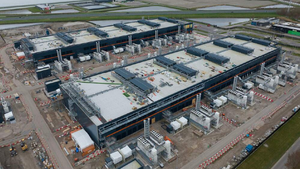
Microsoft’s former UK HQ is being redeveloped as a gas-powered data centre.
A 72MW data centre is proposed for the former Microsoft campus at Thames Valley Park in Reading, where falling demand for office space has opened a route for redevelopment into digital infrastructure. The project proposes natural gas fuel cells as an on-site power solution while grid capacity is brought forward, with air-based cooling to minimise water consumption.
Microsoft said it plans to move staff into the existing HERE building at Thames Valley Park by August 2027, freeing the HQ site for the data centre. A public consultation was held on 7 July 2026, with a planning application expected in autumn 2026 and operation from 2031 onwards.
The Thames Valley story is significant beyond its own footprint. Reading sits within one of the UK’s most congested data centre corridors — west of London, where substation capacity is under intense pressure and grid upgrades are unlikely before the early 2030s. The project team’s decision to propose fuel cells as a bridge solution while additional grid capacity is brought forward is a direct response to that constraint. It is the same rational calculation visible in Devon, in Bedfordshire, and increasingly across the development pipeline: when the grid cannot deliver, developers build their own power.
The gas-powered data centre is no longer a novelty. It is becoming the default development model for any project that cannot wait on the UK grid queue — and the Thames Valley story shows that logic is now reaching into the heart of the UK’s primary data centre corridor.
Sources: Data Centre Dynamics — Microsoft UK’s Thames Valley Park campus could be redeveloped as a gas-powered data center | DataCentral — Reading weighs gas-backed data centre
The government’s planning reforms take effect. Data centres can now bypass local planning entirely.
Under changes introduced through the Planning and Infrastructure Act, mandatory pre-application consultation requirements for Nationally Significant Infrastructure Projects are being removed in July 2026. The UK Government says the reforms could reduce planning timelines for key infrastructure projects by up to 12 months and save developers £1bn during the current Parliament.
Data centres were brought into the NSIP regime earlier this year via the Infrastructure Planning Regulations 2026, meaning major developments can now be approved centrally rather than through local oversight. Projects approved for NSIP status are not subject to local planning authorities and are instead granted permission directly by the UK government.
The UK Government has already directed three proposed data centre developments into the NSIP regime — at Wapseys Wood in Buckinghamshire, Ampthill Road in Bedford, and New Barn Lane in Dartford. The government expects only a small number of very large projects will need to go through the NSIP route. For most developers, the standard local planning process continues to apply. But for large-scale AI infrastructure projects where local opposition or planning complexity is a genuine constraint, the NSIP route now provides a meaningful alternative that did not exist two years ago.
The planning reform does not solve the grid. It does not solve water. But it removes one of the most time-consuming steps from the development process for projects of genuine national significance — and that is a meaningful change in the execution environment.
Sources: Data Centre Magazine — Will UK Gov Planning Reforms Speed Up Data Centre Delivery? | The Register — UK guts planning red tape so datacenters can bypass the neighbors faster | Norton Rose Fulbright — Data centres now Nationally Significant Infrastructure Projects
Savills H1 2026: execution is the decisive variable.
Savills published its H1 2026 UK data centre building capacity spotlight with a clear editorial line: the UK is unlikely to lack demand, capital or strategic relevance. The decisive question is which projects can convert those advantages into deliverable capacity in a more constrained, regulated and execution-sensitive environment.
Supply and demand remain exceptionally tight. New deliveries are being rapidly absorbed, pre-letting has become the norm, and the vacancy rate has fallen from 27% in 2016 to 8% in Q1 2026. Only 48MW of capacity was delivered in Q1 2026 — well below the run rate required to meet demand.
The report’s framework maps precisely onto what the market has been signalling week by week. Power is the primary gatekeeper. Land strategy is no longer just about the site itself but about securing the wider corridor of rights needed to make development possible. Construction has become a major execution filter. And investment appetite, while present, cannot deploy against assets that are not execution-ready.
The combination of the Thames Valley story, the planning reform, and the Savills data tells a consistent story: the market is moving faster than the infrastructure was built to support, and the response — on-site power, central planning routes, execution-focused development — is reshaping what viable projects look like.
Source: Savills — Spotlight: UK Data Centre Building Capacity H1 2026
The week in one line: Microsoft’s former UK HQ is becoming a gas-powered data centre, the government’s planning reforms took effect removing local authority oversight for major projects, and Savills confirmed that execution — not capital or demand — is the market’s defining constraint.
Armason tracks infrastructure signals across the UK and European data centre market. For site availability, grid intelligence, or pipeline advisory, visit armason.co.uk.