This week in UK data centres:
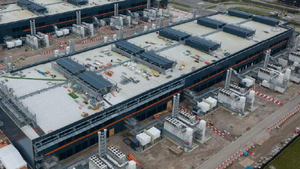
- DataVita secures £300m for two Lanarkshire data centres, unlocked by a £202m National Wealth Fund guarantee — the fund’s first support for domestic compute capacity, with full capacity of both facilities contracted to CoreWeave on a 15-year lease
- The Green Party calls for a nationwide data centre moratorium; Labour rejects it within days, while the revised NPPF published on 17 August strengthens planning support for data centres and AI Growth Zones across England
- Senedd Research publishes a briefing on Wales’s data centre pipeline — 1.4GW proposed against 154MW operational, with the South Wales AI Growth Zone alone projected to require 13% of Wales’s total electricity generating capacity by the early 2030s
- Wired frames the UK grid queue crisis as a phantom data centre problem — 73GW of applications from 315 projects against 45GW of peak national demand, the majority of which will never be built
DataVita secures £300m for Lanarkshire — and the financing structure is the story, not the headline number.
DataVita has secured a £300m debt facility to expand its existing DV1 data centre and construct a new facility, DV3, in the North Lanarkshire AI Growth Zone. The facility is unlocked by a £202m guarantee from the National Wealth Fund — the fund’s first deployment in support of domestic compute capacity. The lending syndicate comprises ING, ABN AMRO, Santander, the Scottish National Investment Bank, and Siemens Financial Services, with the NWF guarantee covering 80% of the £252.5m commercial tranche.
The structure matters more than the number. NWF chief executive Oliver Holbourn was explicit: private finance is difficult to secure for emerging infrastructure at this scale, and the guarantee exists to give lenders the confidence to commit. Britain is not simply attracting capital to AI infrastructure — it is underwriting it. The NWF guarantee is the mechanism that converts a sovereign AI policy ambition into a bankable project.
The commercial anchor is equally significant. Full capacity of both DV1 and DV3 has been contracted to CoreWeave under a 15-year lease — the committed demand that made the financing possible, and the model that the Capital Unlock thesis points to as the sequencing that works. The Lanarkshire AIGZ was designated in January 2026, the NWF guarantee and the CoreWeave lease followed in August. Seven months from designation to £300m of signed debt. That pace is not typical of UK infrastructure development.
Dell has also announced it will establish its Scottish base at the Lanarkshire AI Innovation Park. DV1 is due to complete this year; DV3 follows. The wider development targets 3,400 jobs across construction, engineering, and operations, plus a £543m community fund.
Sources: DataVita secures £300m for data centre rollout in Scotland’s AI Growth Zone — National Wealth Fund | Inside DataVita’s £300m AI data centre expansion in Scotland — Data Centre Magazine | Lanarkshire AI Growth Zone secures £300m and a Dell base — Resultsense
Government rejects the moratorium. The revised NPPF is the policy signal that matters.
Green Party leader Zack Polanski called this week for a nationwide moratorium on large data centre construction, citing electricity and water consumption. Labour rejected it immediately, with a government spokesperson stating that a pause would ‘simply send investment and good jobs abroad, while leaving Britain dependent on overseas computing for the processing of sensitive health and defence data.’ The government added that rejection of a moratorium ‘does not mean a blank cheque for Big Tech’ — developers must plan for clean power, responsible water use, local supply chains, and community investment.
The more substantive planning signal came eleven days earlier. On 17 August, the Ministry of Housing, Communities and Local Government published the revised National Planning Policy Framework for England. The new NPPF strengthens planning support for AI Growth Zones and data centres, requires planning strategy to recognise data-driven industries more explicitly, and places greater emphasis on the strategic electricity and communications infrastructure needed to support development.
The NPPF change does not remove local planning authorities from the process, and it does not guarantee consent for every application. Zone designation does not equal planning consent, planning consent does not equal an electricity connection, and an investment announcement does not equal a construction contract. NESO data centre connection requests exceed 70GW against approximately 5.2GW of connected capacity in its 2030 analysis — the planning framework can move faster than the grid, but grid remains the binding constraint.
Taken together, the moratorium rejection and the revised NPPF confirm the government’s position: accelerate consenting, hold operators to environmental and community standards, rely on the Ofgem commitment fee mechanism to clear the grid queue rather than restricting planning. Whether that sequencing produces faster delivery than the grid timeline allows is the open question.
Sources: UK Green Party calls for nationwide data centre moratorium — Data Centre Dynamics | UK data centre construction 2026: government rejects freeze as planning rules back AI growth — Construction Magazine | Petition calls for moratorium on data centres outside AI Growth Zones — Data Centre Review
Wales faces a 1.4GW pipeline against 154MW of operational capacity. Senedd Research is asking the questions the planning system is not.
Senedd Research published a briefing this week on Wales’s data centre industry. Wales had the highest data centre capacity outside London in Great Britain in 2024, with 154MW operational. Individual planned developments now include proposals of 148MW, 150MW, 200MW, 349MW, and around 600MW — a single site in Bridgend. Together the pipeline adds well over 1.4GW, nearly ten times existing capacity.
The South Wales AI Growth Zone is the policy context for much of this. The UK Government has said the zone has the potential to harness over 1GW by the early 2030s — which the Senedd briefing notes would represent 13% of Wales’s total electricity generating capacity in 2024 (7.9GW). In May 2026, NESO had around 173 grid connection requests for new Welsh and wider UK data centres equating to over 100GW in the queue, making it mathematically impossible for the Welsh pipeline — or any significant portion — to connect on the timescales proposed.
The briefing is notable for what it says plainly: the cumulative draw of nine Welsh sites is not being assessed — each application is considered site by site, with no mechanism to evaluate the sector-wide impact on electricity, water, land, and biodiversity. Developers are organised nationally. Objections remain stubbornly local. The planning system is built to hear them one postcode at a time.
What Wales already has — Vantage’s 148MW campus at Cardiff with its 400kV SuperGrid connection, Nebius at Newport’s CWL1, Microsoft’s development at Imperial Park — demonstrates the region’s genuine credentials. The Senedd briefing raises the question of whether policy and planning can match the speed of the pipeline coming in.
Sources: Data centres in Wales: how will Wales manage a rapidly growing industry? — Senedd Research | What does the data centre boom mean for Wales? — Nation.Cymru | Newport and Cardiff data centre residents — Resultsense
Wired calls it a phantom data centre problem. The framing is useful because it is accurate.
Wired published a piece this week under the headline ‘The UK Power Grid Has a Phantom Data Center Problem.’ 73GW of data centre applications from 315 projects in the UK queue, against 45GW of peak national demand — the queue contains more speculative capacity than the country currently uses for everything. The majority of those projects will not be built. But they occupy queue positions, delay legitimate projects, and produce planning signals that misrepresent where infrastructure will actually land.
Ofgem’s response — the Data Centre Commitment Fee consultation, open until 16 September — is designed to force a declaration of genuine intent. Since wider connections reform began, 7.8GW of projects have been accelerated by an average of six years. The fee and milestone requirements are intended to produce a similar clearing effect on the demand side — projects that cannot demonstrate financial capability, planning progress, and contracted end-user demand at defined intervals will lose their queue position.
For developers with genuine projects, clearing speculative positions is straightforwardly beneficial. A shorter, more credible queue produces faster connection offers, more reliable network investment planning, and a better signal about where infrastructure is genuinely needed. The consultation closes 16 September — operators with queue positions should be engaging now.
Sources: The UK Power Grid Has a Phantom Data Center Problem — Wired | UK energy regulator promises power crackdown for data centres — Capacity Global | Ofgem pledges crackdown on unviable data centres — Energy Voice
The week in one line: DataVita’s £300m Lanarkshire financing — underwritten by a £202m NWF guarantee and anchored by a 15-year CoreWeave lease — demonstrated what sovereign AI infrastructure financing looks like in practice; the government rejected the Green moratorium while the revised NPPF confirmed planning support, leaving grid as the binding constraint; Senedd Research set out Wales’s 1.4GW pipeline against its 154MW reality; and Wired named the queue distortion that makes all of this harder than it needs to be.
Armason tracks infrastructure signals across the UK and European data centre market. For site availability, grid intelligence, or pipeline advisory, visit armason.co.uk.
Related reading
· UK Data Centre Intelligence — Week Commencing 17 August 2026
· AI Growth Zones UK: what they actually mean for data centre developers and grid access
· Ofgem first ready first connected: what the grid queue reform means for data centre developers
· Scotland data centre development: why the market is expanding beyond London