This week in UK data centres:
- Drax, Brookfield, Brookfield’s UK platform Radiant and Qatar-based Qai have agreed to develop a data centre platform at Drax Power Station with an initial £2.5bn for a 100MW first phase targeted for early 2028, and Brookfield puts potential investment above £20bn including chips
- BCLP’s reading of the Data Centre Covenant notes that “strategic” and “exceptionally strategic” are not yet defined, that criteria are intended to be in place by the second Gate 2 connections window in mid-2027, and that the policy risks creating a two-tier market
- Biodiversity net gain of at least 10% became mandatory for nationally significant infrastructure projects in England on 2 November, so developers of data centres that go the NSIP route now have to deliver it in their applications
Drax puts a £20bn platform on a site that already has the grid connection.
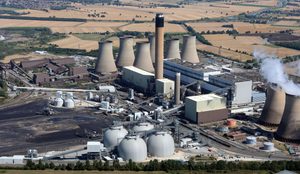
Drax announced on 3 November a strategic partnership with Brookfield, its UK platform Radiant and Qai, the Qatar-headquartered technology company, to develop a data centre of more than 1GW on the Drax Power Station estate. The phased plan is up to 100MW in phase 1, a further 500MW between 2028 and 2031, and more after that. Brookfield puts potential total investment above £20bn including semiconductor chips, with an initial £2.5bn for phase 1, which IPE Real Assets reports is scheduled to be operational in the first quarter of 2028.
The site is over 1,000 acres next to one of the UK’s largest substations, with about 4GW of grid access and 2.6GW of dispatchable generation. Phase 1 imports power from the grid through existing infrastructure, which Drax manages. Phases 2 and 3 are planned to use behind-the-meter supply from existing Drax generation under a long-term power purchase agreement, subject to consents. Drax says phase 2 depends on a mechanism in its November 2025 Contract for Difference with the government that lets it request up to 500MW for a data centre, subject to agreement from the government and the Low Carbon Contracts Company.
The conditions for phase 1 are listed plainly: planning approval, government and network regulatory approvals, an acceptable anchor tenant, commercial agreements and final investment decisions from each party. A phase 1 planning application is being prepared, with public consultation expected to start in November. Radiant will seek anchor customer commitments before construction, and the partners plan a voluntary community benefits fund separate from any planning obligations.
The signal is where large capital goes when the power question is already answered. A site with existing grid access and generation has a start date that a greenfield site cannot offer. It still has to clear consent, regulators and a tenant, which is the same test every other project faces, and a date in the 2030s elsewhere in the country, at Loughton, shows why that matters.
Sources: Strategic partnership for GW-scale data centre (Drax) | Brookfield, QIA and Drax to build £20bn Northern England data centre project (IPE Real Assets) | Qai builds strong global AI partnerships through major UK data centre project (Qatar News Agency) | Drax and Brookfield strike investment deal of up to £20bn for data centre (ITV News)
Lawyers read the covenant: strategic is still undefined, and the market may split in two.
Put the Drax announcement next to this. A project with existing grid access, a named capital partner and a community benefits fund is shaped like the one the covenant describes, though nothing in the announcement says it is or will be designated strategic. For developers, the next six to eight months are for building the evidence file: a power position, a benefit plan, efficiency numbers and a tenant.
Sources: The UK’s new Data Centre Covenant explained (BCLP) | The Data Centre Covenant (HM Treasury, GOV.UK)
Biodiversity net gain is now mandatory for data centre NSIPs.
GOV.UK guidance confirms that from 2 November 2026 biodiversity net gain is mandatory for nationally significant infrastructure projects in England, and that developers applying for a development consent order on or after that date need to deliver at least 10% net gain in biodiversity. The government has also published a biodiversity gain statement specifically for data centre NSIPs, setting out how applicants can achieve the biodiversity gain objective.
The change sits alongside the draft National Policy Statement for data centres, which will guide decisions on projects directed into the NSIP regime and is open for consultation until 8 January 2027. Between them, the route for the largest projects is becoming clearer, and it comes with a defined environmental obligation attached.
For a developer, the practical point is timing and cost. Net gain is a design and land question that needs to be settled early, because habitat creation or off-site units take time to secure. A scheme that treats it as a late-stage planning item is the one that gets surprised.
Sources: Biodiversity net gain: nationally significant infrastructure projects (GOV.UK) | NSIPs: biodiversity gain statement for data centres (GOV.UK) | Draft National Policy Statement for Data Centres, consultation (GOV.UK)
The week in one line: £20bn of capital has been pointed at a site with its grid connection already in place, the covenant that will decide who else gets priority is still undefined until mid-2027, and the environmental price of the NSIP route has just been fixed. The power is arriving where it already exists, and the rules for everyone else are still being written.
Armason tracks infrastructure signals across the UK and European data centre market. For site availability, grid intelligence, or pipeline advisory, visit armason.co.uk.
Related reading
· On-site power generation for data centres in the UK: why the grid queue is accelerating the shift
· Data centre grid connection in the UK: timelines, queues and what operators need to know
· Data centre site selection in the UK: the new sequence in a power-first market
· The Ofgem data centre commitment fee: what operators with grid positions need to do